DnXT Reviewer — eCTD Viewer & Review Platform


DnXT Reviewer

See the Dossier the Way
the Agency Sees It.

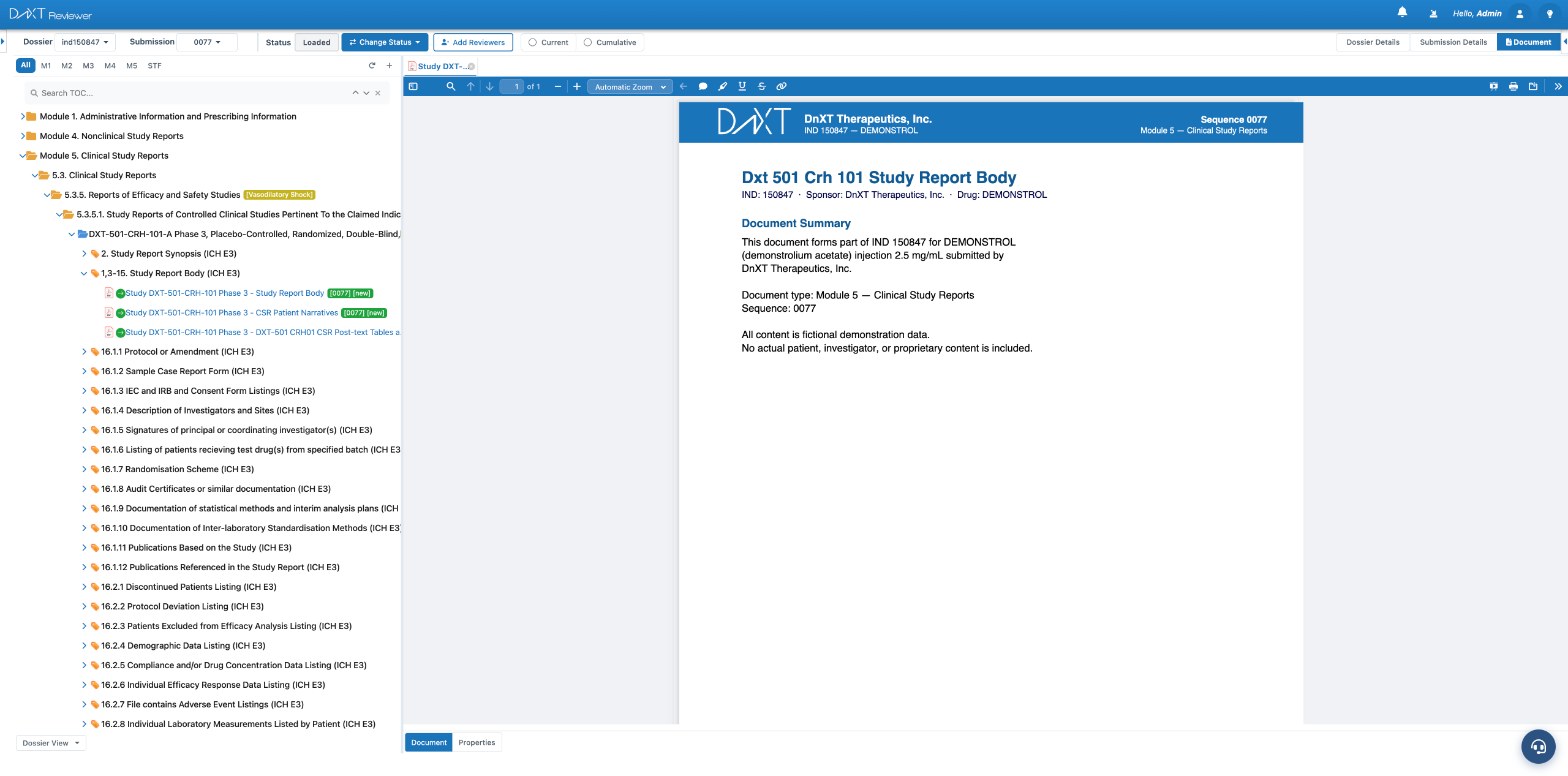
DnXT Reviewer renders complete eCTD lifecycles — cumulative and current views, native FDA XFA forms that break every stock PDF viewer, gigabyte-scale files streamed instantly, and AI-assisted review with version diff and chronology. Built for the people who have to answer for what's actually in the submission.

DnXT Reviewer — Cumulative View ● Seq 0000–0043
m1 › us › 1.1 Forms — Lifecycle Resolved
📄
form-fda-356h.pdf XFA · Dynamic
Rendered natively · Seq 0043
New
📄
cover-letter.pdf Current
Replaces seq 0041 version
Replace
🗎
clinical-overview.pdf m2.5
Appended · 2 versions in lifecycle
Append
🔍
study-5351-report.pdf 2.1 GB
Range-streamed · opens in seconds
Streamed
44Sequences
Merged
0.7sSubmission
List Load
100%FDA Forms
Rendered
AI Review Assist
100%
FDA XFA Forms
Rendered Natively
12s → 0.7s
Submission Listing
After Optimization
GB-Scale
Files Streamed via
HTTP Range Requests
All
Dossiers Searchable
from One Query

Who This Is Built For

A viewer is where regulatory truth gets checked. These are the people doing the checking.

🔍
Regulatory Reviewer / RA Lead
Sponsor-Side Review Before and After Filing

You review what's actually being sent — not what the tracker says is being sent. That means walking the cumulative dossier, checking that the current view resolves lifecycle operations correctly, and opening FDA forms that stock PDF viewers render as a blank "Please wait…" page. When a viewer can't show you a 356h or takes a minute to open a large study report, review quality quietly degrades.

  • Cumulative and current views with lifecycle operations resolved correctly
  • FDA XFA forms (1571, 356h, 2253, 3674) rendered fully, dynamic rows included
  • Gigabyte study reports open in seconds via range streaming
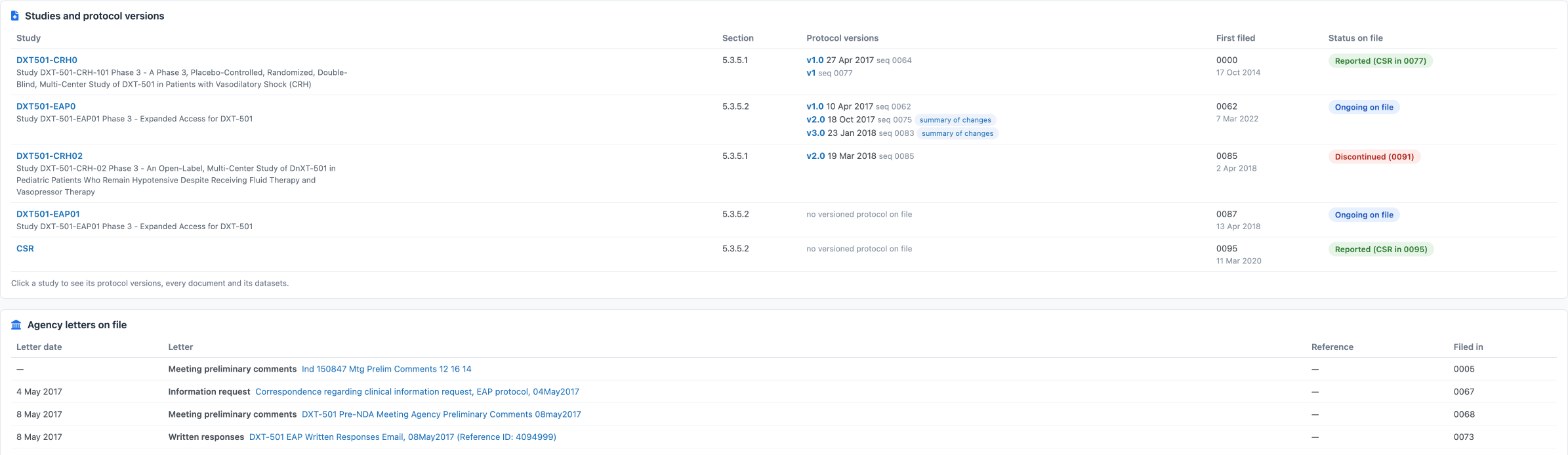
  • Version diff and chronology to see what changed between sequences
Publishing QC Lead
CRO / In-House Publishing Team

Your QC pass happens under deadline pressure, against the assembled sequence, with the agency's eyes in mind. You need the viewer to behave exactly like the record — no cached stale trees, no silently missing leaves, no links that die at the last page. And when an import goes wrong upstream, you need to see that immediately, not after the sponsor does.

  • Hardened import pipeline: chunked uploads for >99MB files, duplicate-import elimination
  • Internal PDF links and bookmarks behave as they will for the agency reviewer
  • Cross-dossier search to verify referenced content actually exists
  • Sync with Veeva-managed content where the DMS is the source
🤝
Partner / Licensing Reviewer
Alliance Management, Due Diligence, Audits

You've been granted access to review a dossier you didn't build — for due diligence, a partnership, or an audit. You don't know its folder conventions and you don't have weeks to learn them. You need to navigate by structure, search by meaning, and trust that what you see is the complete, current picture.

  • Navigate by eCTD structure with lifecycle badges, not raw folders
  • Semantic and keyword search across the full dossier set you're granted
  • Scoped, granted access per dossier — see exactly what you should, nothing else
  • DOCX viewing via managed PDF renditions with an HTML toggle

How It Works

From a raw sequence ZIP to a fully navigable, searchable, AI-assisted review environment.

1
Import
Sequence Import, Hardened for Real-World Files

Sequences arrive as uploads or ZIPs and pass through a pipeline hardened by production experience: chunked upload for files over 99MB, duplicate auto-import elimination, manifest polling, and pre-filtering. Failed or partial imports surface loudly instead of leaving a silently incomplete dossier — because a review performed against missing content is worse than no review at all.

2
Resolve
Lifecycle Resolution: Cumulative and Current Views

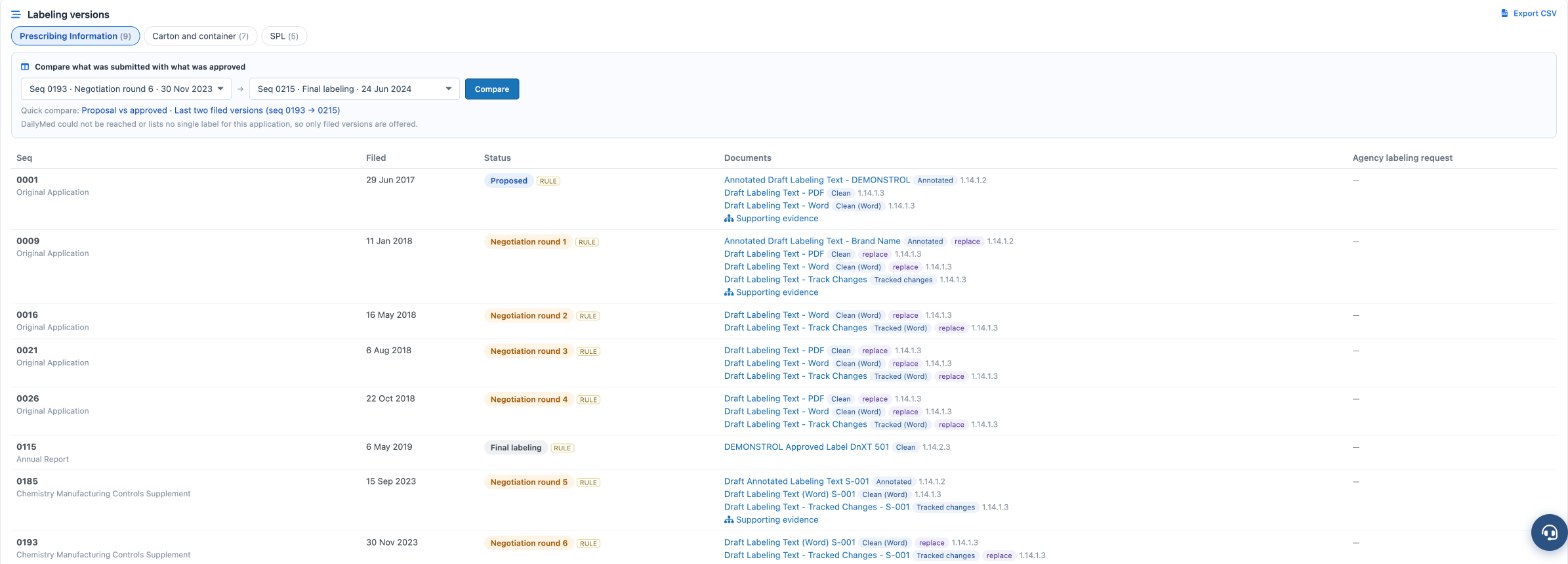
The platform resolves new, replace, append, and delete operations across every imported sequence to build two canonical views: cumulative (everything ever submitted, in context) and current (what is in force right now). Lifecycle badges on the tree show each leaf's operation at a glance, so a reviewer can tell a replaced document from an appended one without opening the backbone XML.

3
Render
Native Rendering — Including the Forms Everyone Else Fails On

FDA's LiveCycle XFA forms (1571, 356h, 2253, 3674 and friends) render as a blank "Please wait…" page in stock PDF.js-based viewers because their content is generated dynamically at open time. DnXT Reviewer renders XFA natively, dynamic rows included. Word documents are viewed through managed PDF renditions with an HTML toggle, and gigabyte-scale study reports stream via HTTP range requests so the first page appears in seconds.

4
Navigate
Links, Bookmarks, and Structure That Behave

Internal PDF links resolve to the right destination — including the historically troublesome last-page targets — and bookmarks work the way an agency reviewer expects. Navigation follows the eCTD structure rather than raw folders, so section context (module, section number, leaf title) is always visible while you read.

5
Assist
AI Review Assist: Suggestions, Diff, and Chronology

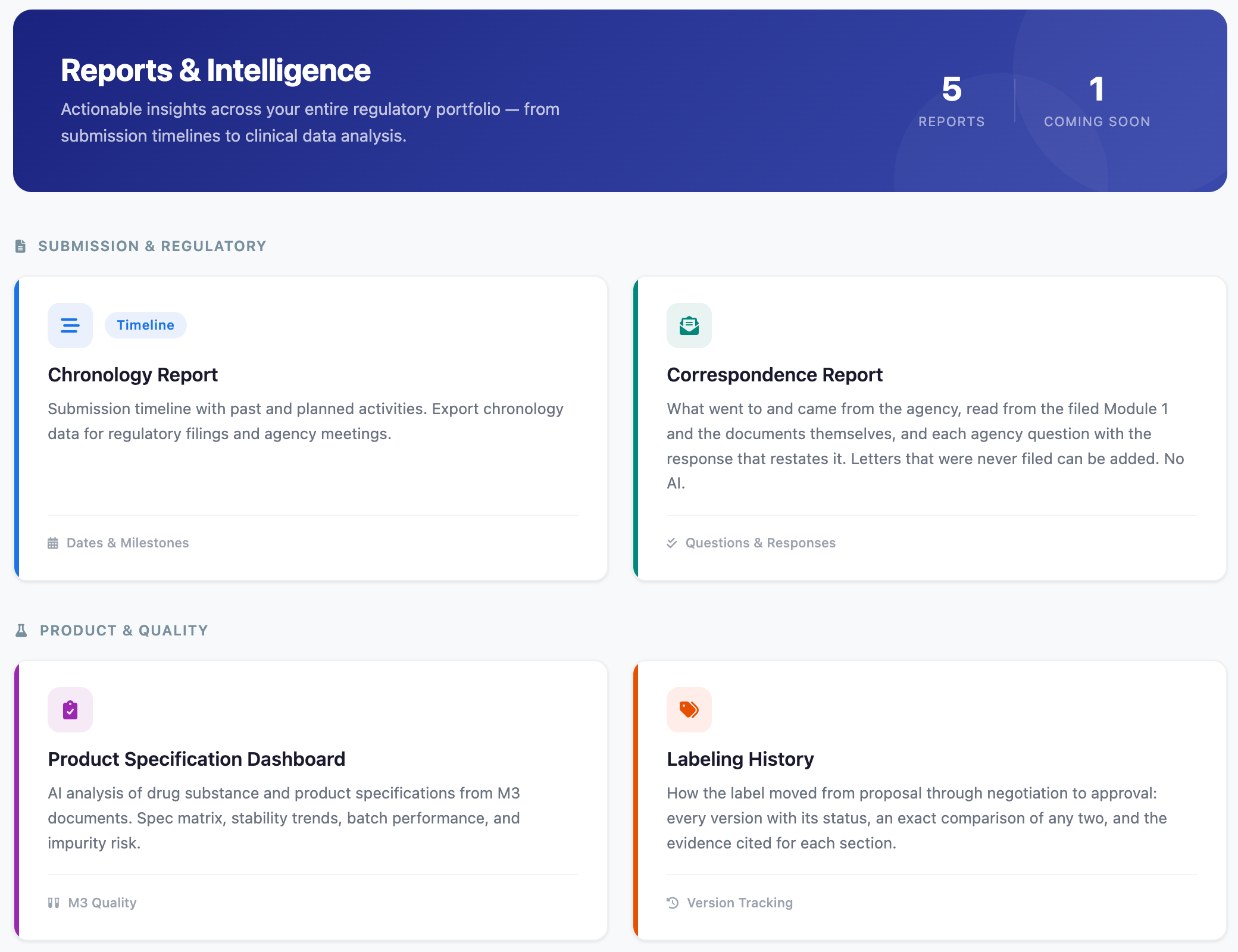
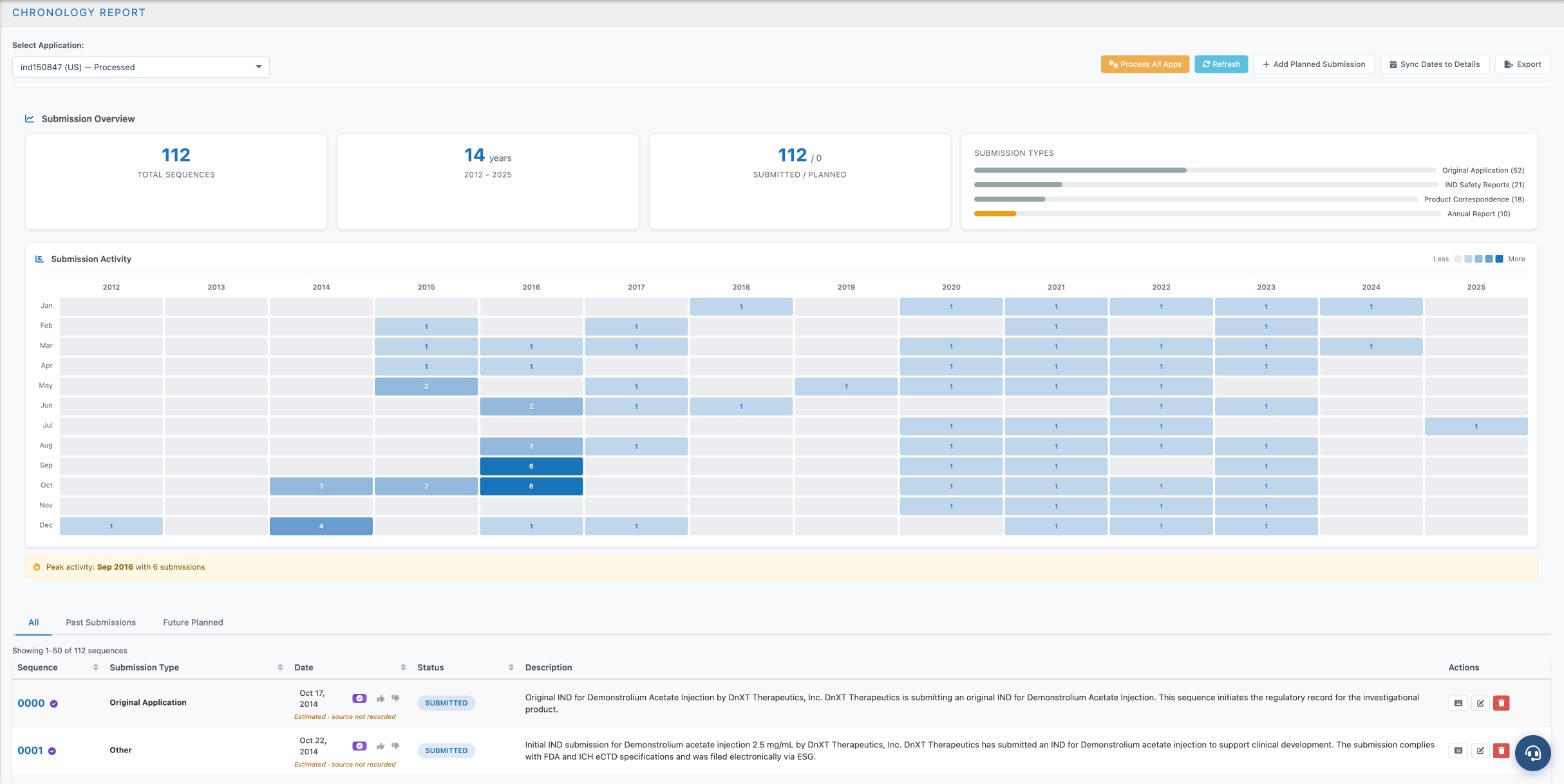
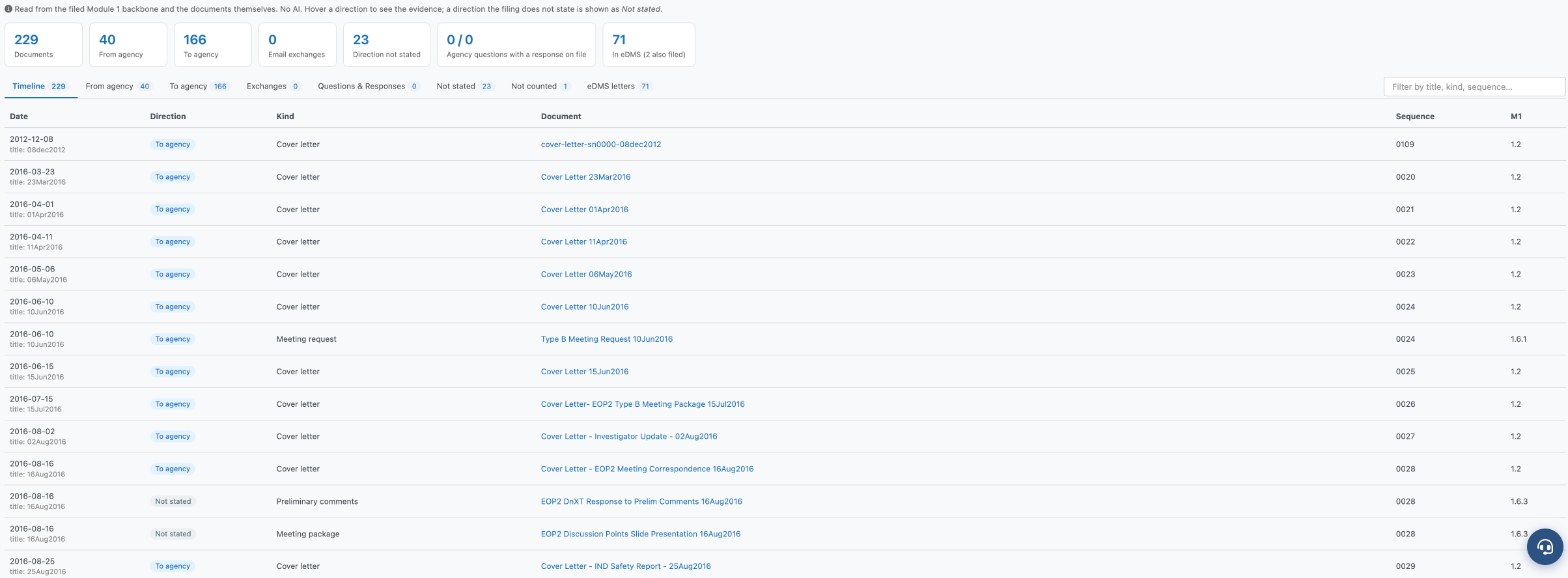
AI features accelerate the review itself: document suggestions surface related content, version diff highlights what changed between two versions of a document, and the chronology view assembles a date-ordered narrative of the application's history. All assistance is advisory — it points, you judge — consistent with the platform's AI intelligence architecture.

6
Search
Cross-Dossier Search and Team Notifications

Unified search spans every dossier you're granted — keyword and semantic — so "where do we discuss renal impairment dosing" is one query, not an afternoon. Import events trigger email notifications to the review team, and granted access is scoped per dossier so external reviewers see exactly what they should and nothing more.

Six Reviewer Capabilities That Decide Review Quality

Viewers look interchangeable in a demo. These are the capabilities that separate them in the third month of real use.

🗺

Cumulative & Current Views

Lifecycle operations — new, replace, append, delete — are resolved across all sequences into a cumulative view of everything submitted and a current view of what is in force. Badges on every leaf show its lifecycle state at a glance. This is the difference between reviewing a pile of sequences and reviewing an application: the agency sees a lifecycle, and so should you.

📝

Native XFA Form Rendering

FDA forms 1571, 356h, 2253, and 3674 are dynamic XFA documents that stock PDF viewers cannot render — reviewers get a blank "Please wait…" page where the form should be. DnXT Reviewer includes an XFA-capable rendering engine that displays these forms fully, dynamic rows and all, inside the review workspace. If your current viewer makes you download FDA forms and open them in desktop Acrobat, this single capability changes your daily workflow.

Large-File Streaming

Clinical study reports and integrated summaries routinely run to hundreds of megabytes or more. DnXT streams them via HTTP range requests, so the first page renders in seconds and navigation stays responsive — no full-file download, no browser tab meltdown. Combined with a submissions listing optimized from 12 seconds to 0.7, the environment stays fast at the exact moments deadline pressure peaks.

🔍

Cross-Dossier Unified Search

Search every dossier you can access from one query — keyword for precision, semantic for meaning. Results carry their eCTD context so you land in the right module and section, not just the right file. For due-diligence and audit scenarios where the reviewer didn't build the dossier, search is the difference between hours and minutes.

🤖

AI Suggestions, Diff & Chronology

AI review assist surfaces related documents while you read, diffs two versions of a document to show exactly what changed, and assembles a date-ordered chronology of the application's regulatory history. Every AI capability is advisory and auditable — it accelerates human judgment rather than replacing it.

🛡

Hardened Import Pipeline

Chunked uploads handle individual files beyond 99MB reliably; duplicate auto-imports are eliminated; manifests are polled and pre-filtered; and failures announce themselves instead of producing silently incomplete dossiers. Import correctness is treated as a review-integrity issue, because it is one.

DnXT Reviewer vs The Alternative

Free eCTD viewers exist, and legacy review modules ship with legacy publishing suites. Here is where the differences actually show up.

Capability DnXT Reviewer Free eCTD Viewers Legacy Review Tools
FDA XFA form rendering Native, dynamic rows included "Please wait…" blank page Often requires desktop Acrobat
Cumulative / current lifecycle views Resolved across all sequences Per-sequence only, or basic Usually supported
Gigabyte-file performance Range-streamed, seconds to first page Full download, browser strain Varies; often desktop-bound
Cross-dossier semantic search Keyword + semantic, one query Not offered Keyword within one dossier
AI diff & chronology Built in, auditable Not offered Not offered
Deployment Cloud, browser-only, tenant-isolated Desktop installs Client-server, IT-heavy

Review Mechanics Worth Knowing

📄
The Forms Problem, Solved
Why XFA breaks viewers, and what native support means
  • XFA is a program, not a page — content is generated at open time, which static renderers can't do
  • Dynamic rows — repeating sections (investigators, products) render fully
  • In-workspace — no downloading forms to desktop Acrobat mid-review
  • Covers the M1 set — 1571, 356h, 2253, 3674 and related forms
🔁
Lifecycle Correctness
The current view you can defend
  • Operation resolution — new / replace / append / delete applied in sequence order
  • Badged tree — each leaf shows its lifecycle state inline
  • Cache healing — cumulative views rebuild from source when needed, never silently stale
  • Grouped submissions — cross-referenced applications merge into the review picture
🔗
DMS-Connected Review
Meet the content where it lives
  • Veeva sync — review Vault-managed submissions inside DnXT
  • DOCX renditions — managed PDF renditions with an HTML view toggle
  • Email notifications — the team knows when a sequence lands
  • Scoped grants — per-dossier access for external reviewers
Performance as a Feature
Review speed is review quality
  • 0.7-second listings — submissions grid optimized from 12 seconds
  • Range streaming — first page of a 2GB report in seconds
  • Session integrity — expired sessions surface as errors, never as silently empty screens
  • Browser-only — no installs, no desktop dependency

Review What's Actually in the Submission.

Open a real dossier in DnXT Reviewer — lifecycle views, native FDA forms, and AI-assisted review in the browser.